
Built beyond a single platform ecosystem
Operate independent stores and global marketplace channels in one execution system.
ShopifyAmazonTikTok ShopShopeeLazadaDTC
From product visuals and marketing video to storefronts and daily operations, Haivex breaks work down, assigns specialized agents, hands off each next step, and reports outcomes in one continuous execution path.

Create product visuals, launch the storefront listing, and publish it to target channels.
 Haivex
I will analyze the product and target market, use Haivis to create visual directions, and let Haiwork prepare product data, storefront pages, channel publishing, and execution feedback.

Agents connect market analysis, product visuals, marketing video, product information, and channel publishing around one launch objective, then continue handling customer inquiries.
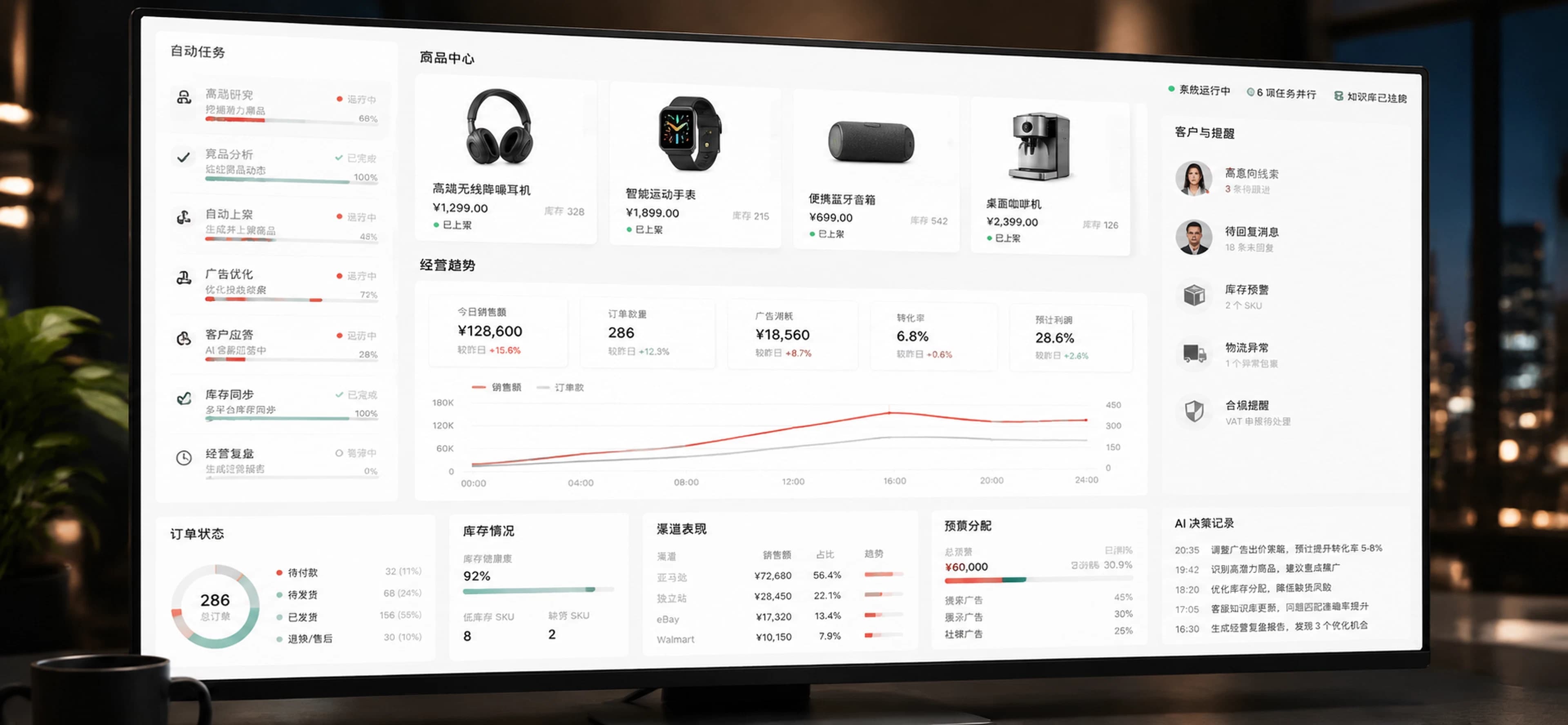
Advance sourcing, listing, campaigns, and monitoring while using product knowledge to answer across channels, identify intent, and preserve inquiry context.
Explore Haiwork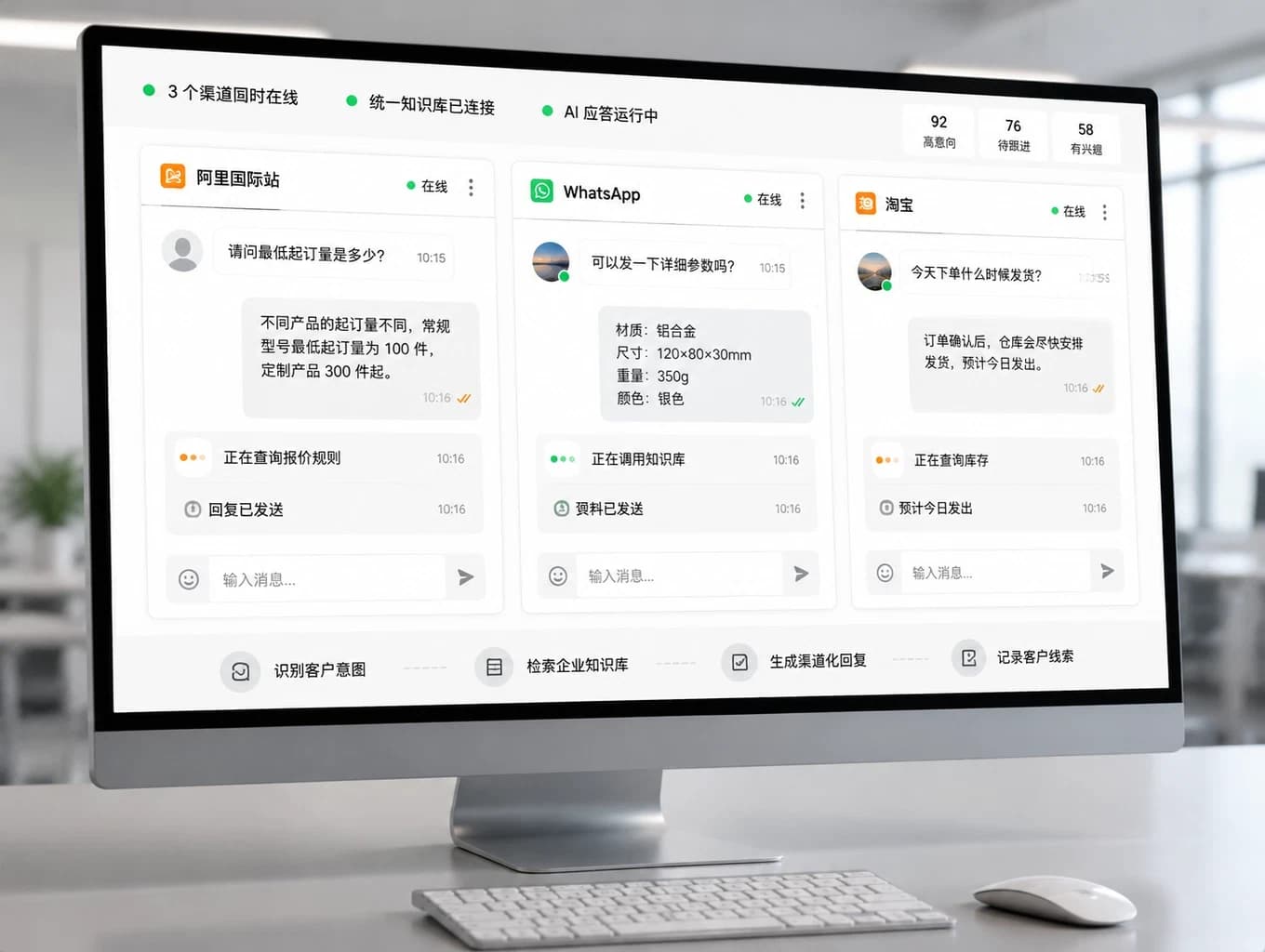
Operate independent stores and global marketplace channels in one execution system.
Connect Amazon, Shopify, TikTok Shop, and more while keeping products, tasks, customer conversations, and outcomes in sync.

Product images, detail pages, and campaign assets now keep one consistent visual direction. When a product enters a new market, the team adjusts the message and specifications instead of rebuilding everything from scratch.

Sourcing, listing, advertising, and performance data used to live on separate pages. Now tasks move forward continuously, exceptions return quickly, and the team spends far less time checking and synchronizing work.

Starting from one product brief, visuals, video, listing, and campaigns keep moving toward the same objective without repeated information transfers between tools.

Adapting one campaign for several platforms used to mean repeated changes to sizing, messages, and layouts. The new workflow removes hours of repetitive adjustments and gets content into more channels faster.

Independent stores, Amazon, and Shopify can share one operating path for products and task state instead of locking the team into one platform ecosystem.

Haiwork organizes repeated store operations into a clear process, from listings and campaigns through review, while keeping important decisions with the team.

Standard content and operations workflows can be reused across more clients and stores, leaving the team focused on strategy, creative direction, and critical conversations.

Once service, orders, logistics, and after-sales status came together, handoffs and reviews became much clearer. The team no longer searches across several systems before responding to a customer.

Haivis produces product graphics, detail-page content, and campaign posters in batches, with multi-scene and multi-size assets refined in one workspace.

Connecting content production and operational execution in one workflow keeps assets, channels, and outcomes from getting lost during handoffs, giving every project a steadier rhythm.

In the Haiveo product demo, one product brief quickly becomes a script and several video versions, which fits how marketing teams need to produce at scale.

Agents share product and brand context, so the result of one stage moves directly into the next and the entire launch feels more connected.

The Haiveo preview workflow prepares video versions with different messages, ratios, and durations around one product, making platform adaptation much more direct.

We can see what every agent is handling, what has finished, and where human judgment is needed. Automation does not remove team control.

Haiwork brings customer messages, orders, logistics, and after-sales status together, significantly reducing cross-dashboard searches and manual records.

Haiwork organizes sourcing, bulk listing, advertising, and performance monitoring as continuous tasks, returning exceptions to the team when needed.
Product images, detail pages, and campaign assets now keep one consistent visual direction. When a product enters a new market, the team adjusts the message and specifications instead of rebuilding everything from scratch.
Sourcing, listing, advertising, and performance data used to live on separate pages. Now tasks move forward continuously, exceptions return quickly, and the team spends far less time checking and synchronizing work.
Starting from one product brief, visuals, video, listing, and campaigns keep moving toward the same objective without repeated information transfers between tools.
Adapting one campaign for several platforms used to mean repeated changes to sizing, messages, and layouts. The new workflow removes hours of repetitive adjustments and gets content into more channels faster.
Independent stores, Amazon, and Shopify can share one operating path for products and task state instead of locking the team into one platform ecosystem.
Haiwork organizes repeated store operations into a clear process, from listings and campaigns through review, while keeping important decisions with the team.
Standard content and operations workflows can be reused across more clients and stores, leaving the team focused on strategy, creative direction, and critical conversations.
Once service, orders, logistics, and after-sales status came together, handoffs and reviews became much clearer. The team no longer searches across several systems before responding to a customer.
Haivis produces product graphics, detail-page content, and campaign posters in batches, with multi-scene and multi-size assets refined in one workspace.
Connecting content production and operational execution in one workflow keeps assets, channels, and outcomes from getting lost during handoffs, giving every project a steadier rhythm.
In the Haiveo product demo, one product brief quickly becomes a script and several video versions, which fits how marketing teams need to produce at scale.
Agents share product and brand context, so the result of one stage moves directly into the next and the entire launch feels more connected.
The Haiveo preview workflow prepares video versions with different messages, ratios, and durations around one product, making platform adaptation much more direct.
We can see what every agent is handling, what has finished, and where human judgment is needed. Automation does not remove team control.
Haiwork brings customer messages, orders, logistics, and after-sales status together, significantly reducing cross-dashboard searches and manual records.
Haiwork organizes sourcing, bulk listing, advertising, and performance monitoring as continuous tasks, returning exceptions to the team when needed.
Haiwork organizes sourcing, bulk listing, advertising, and performance monitoring as continuous tasks, returning exceptions to the team when needed.
Haiwork brings customer messages, orders, logistics, and after-sales status together, significantly reducing cross-dashboard searches and manual records.
We can see what every agent is handling, what has finished, and where human judgment is needed. Automation does not remove team control.
The Haiveo preview workflow prepares video versions with different messages, ratios, and durations around one product, making platform adaptation much more direct.
Agents share product and brand context, so the result of one stage moves directly into the next and the entire launch feels more connected.
In the Haiveo product demo, one product brief quickly becomes a script and several video versions, which fits how marketing teams need to produce at scale.
Connecting content production and operational execution in one workflow keeps assets, channels, and outcomes from getting lost during handoffs, giving every project a steadier rhythm.
Haivis produces product graphics, detail-page content, and campaign posters in batches, with multi-scene and multi-size assets refined in one workspace.
Once service, orders, logistics, and after-sales status came together, handoffs and reviews became much clearer. The team no longer searches across several systems before responding to a customer.
Standard content and operations workflows can be reused across more clients and stores, leaving the team focused on strategy, creative direction, and critical conversations.
Haiwork organizes repeated store operations into a clear process, from listings and campaigns through review, while keeping important decisions with the team.
Independent stores, Amazon, and Shopify can share one operating path for products and task state instead of locking the team into one platform ecosystem.
Adapting one campaign for several platforms used to mean repeated changes to sizing, messages, and layouts. The new workflow removes hours of repetitive adjustments and gets content into more channels faster.
Starting from one product brief, visuals, video, listing, and campaigns keep moving toward the same objective without repeated information transfers between tools.
Sourcing, listing, advertising, and performance data used to live on separate pages. Now tasks move forward continuously, exceptions return quickly, and the team spends far less time checking and synchronizing work.
Product images, detail pages, and campaign assets now keep one consistent visual direction. When a product enters a new market, the team adjusts the message and specifications instead of rebuilding everything from scratch.
Haiwork organizes sourcing, bulk listing, advertising, and performance monitoring as continuous tasks, returning exceptions to the team when needed.
Haiwork brings customer messages, orders, logistics, and after-sales status together, significantly reducing cross-dashboard searches and manual records.
We can see what every agent is handling, what has finished, and where human judgment is needed. Automation does not remove team control.
The Haiveo preview workflow prepares video versions with different messages, ratios, and durations around one product, making platform adaptation much more direct.
Agents share product and brand context, so the result of one stage moves directly into the next and the entire launch feels more connected.
In the Haiveo product demo, one product brief quickly becomes a script and several video versions, which fits how marketing teams need to produce at scale.
Connecting content production and operational execution in one workflow keeps assets, channels, and outcomes from getting lost during handoffs, giving every project a steadier rhythm.
Haivis produces product graphics, detail-page content, and campaign posters in batches, with multi-scene and multi-size assets refined in one workspace.
Once service, orders, logistics, and after-sales status came together, handoffs and reviews became much clearer. The team no longer searches across several systems before responding to a customer.
Standard content and operations workflows can be reused across more clients and stores, leaving the team focused on strategy, creative direction, and critical conversations.
Haiwork organizes repeated store operations into a clear process, from listings and campaigns through review, while keeping important decisions with the team.
Independent stores, Amazon, and Shopify can share one operating path for products and task state instead of locking the team into one platform ecosystem.
Adapting one campaign for several platforms used to mean repeated changes to sizing, messages, and layouts. The new workflow removes hours of repetitive adjustments and gets content into more channels faster.
Starting from one product brief, visuals, video, listing, and campaigns keep moving toward the same objective without repeated information transfers between tools.
Sourcing, listing, advertising, and performance data used to live on separate pages. Now tasks move forward continuously, exceptions return quickly, and the team spends far less time checking and synchronizing work.
Product images, detail pages, and campaign assets now keep one consistent visual direction. When a product enters a new market, the team adjusts the message and specifications instead of rebuilding everything from scratch.